Cosmopolita Group | Luxury Apartments & Boutique Hotel in Barcelona and Costa Brava

Изменить содержимое

Barcelona's Cultural Heritage: What Lies Behind the Façade of the City of Festivals?

Barcelona is a city in a constant dialogue between its past and present. This conversation whispers from behind building façades and in the intimacy of its courtyards, where Roman foundations, Gothic grandeur, the curves of Modernisme, and the innovative spirit of the avant-garde all intertwine. The city itself is an endless open-air tour.
Cover Barcelona's Cultural Heritage

Content

Ancient Roots: Shadows of the Roman Empire

Walking through the Gothic Quarter (Barri Gòtic) is like stepping back two thousand years, as it’s here that you’ll find the city’s most ancient testimonies.

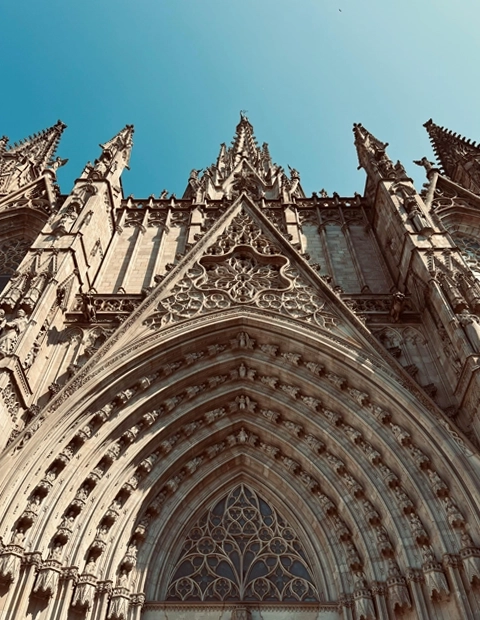
Barcelona Cathedral (Cathedral of the Holy Cross and Saint Eulalia)

The cathedral stands on the site of a 6th-century Roman basilica. In 877 AD, the relics of Saint Eulalia, a Christian martyr and the patron saint of Barcelona, were transferred here. The cathedral houses the crypt of Saint Eulalia, and a gaggle of live geese resides in one of its cloister chapels—their whiteness, Catalans believe, symbolizing the purity of the saint.

Roman Walls of Barcelona

This archaeological complex consists of preserved fragments of the ancient defensive wall of the Roman colony of Barcino, Barcelona’s original name.

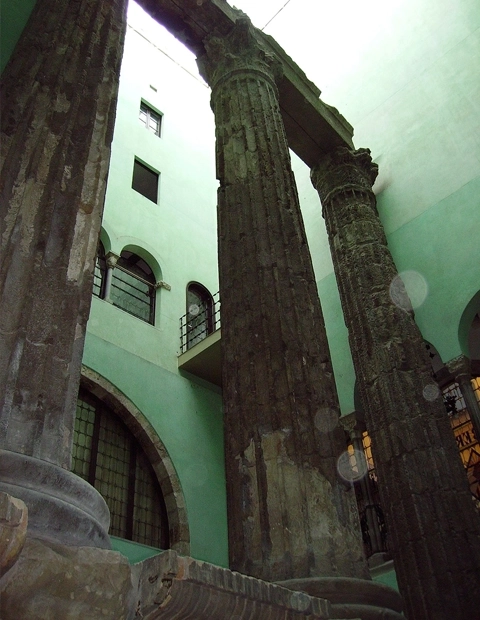
The Four Corinthian Columns of the Temple of Augustus

A monument from the Roman era located within the Gothic Quarter. The temple was built in honor of Emperor Augustus in the 1st century AD from sandstone quarried on the nearby Montjuïc hill. The 37-meter tall building, surrounded by numerous 9-meter high columns, once towered over the ancient Roman city of Barcino.
Barcelona Cathedral_1
Barcelona Cathedral
Roman Walls of Barcelona
Roman Walls
Four Corinthian Columns
Corinthian Columns

These monuments are silent witnesses to the era that laid the foundation for the great city to come.

Medieval Grandeur: A Maritime Power and Gothic Strictness

The flourishing of Catalonia as a mighty maritime republic left Barcelona a legacy of magnificent Gothic architecture.

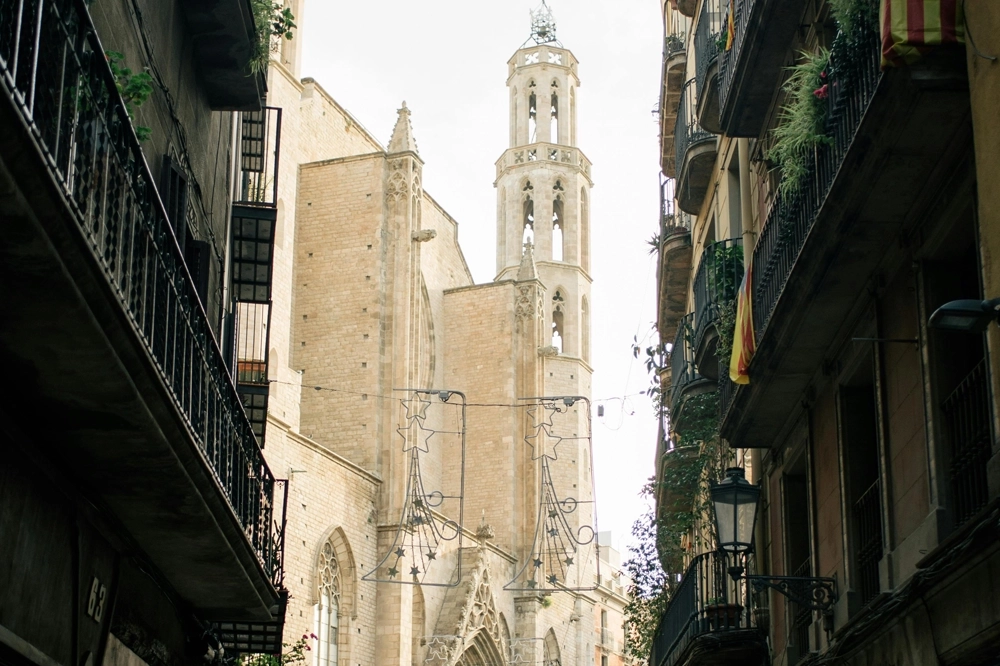
Santa Maria del Mar_1

Santa Maria del Mar:

A masterpiece of Catalan Gothic in the La Ribera district. Known as the "cathedral of La Ribera" for its pure lines, harmonious proportions, and the sense of weightlessness created by its slender columns and immense stained-glass windows. It is a monument to the will and strength of the sailors and stevedores who funded and built it with their own hands.
________

The Royal Palace_1

The Royal Palace and Plaça del Rei (King's Square):

The Royal Palace and Plaça del Rei (King's Square): Legend holds that it was here that the Catholic Monarchs, Ferdinand and Isabella, received Christopher Columbus upon his return from America. The square's ensemble is a perfectly preserved corner of medieval Barcelona.
________

Modernisme: The Explosion of Fantasy by Gaudí and His Contemporaries

At the turn of the 20th century, Barcelona experienced a unique cultural flourishing, whose primary expression was Catalan Modernisme. This was a true explosion of fantasy that changed the city’s face forever. While Antoni Gaudí is rightly the face of this style, his genius overshadows but does not negate the contributions of other outstanding masters.

Antoni Gaudí

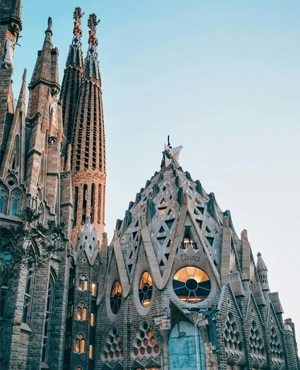
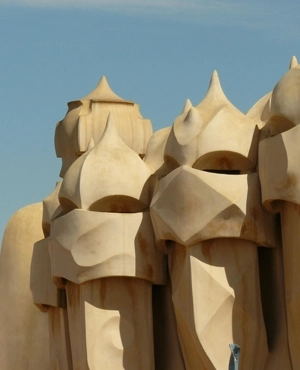
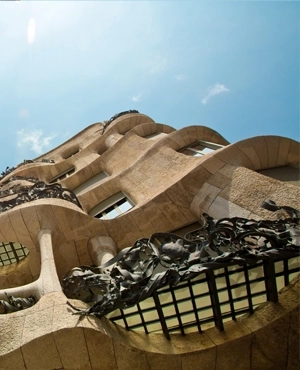
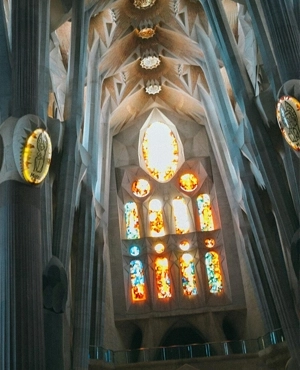
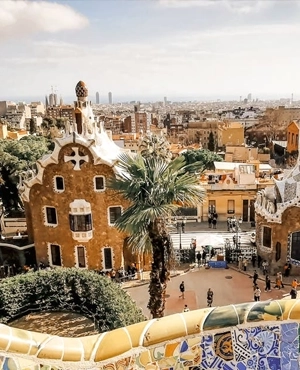
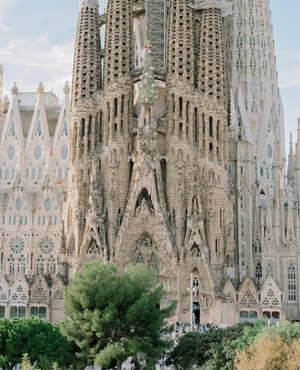
Antoni Gaudí was a visionary who drew inspiration from the laws of nature. His masterpieces—the Sagrada Família, Park Güell, and the houses of Batlló and Milà (La Pedrera)—are worlds without straight lines. In them, architecture becomes sculpture, and functional elements like columns, staircases, and balconies mimic trees, bones, and ocean waves.

Lluís Domènech i Montaner

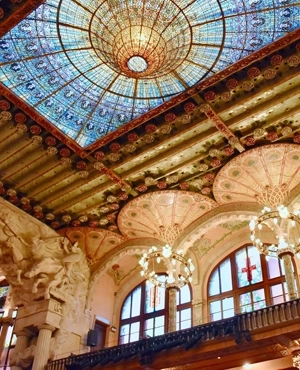
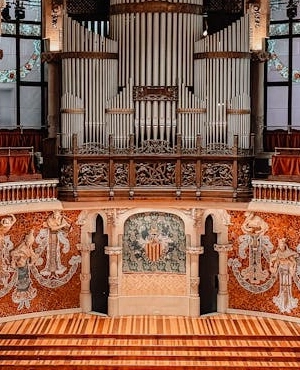
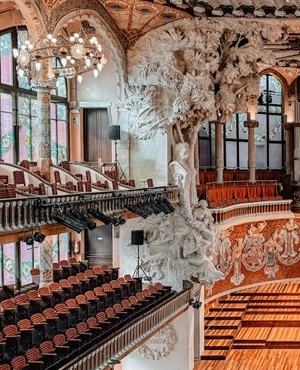
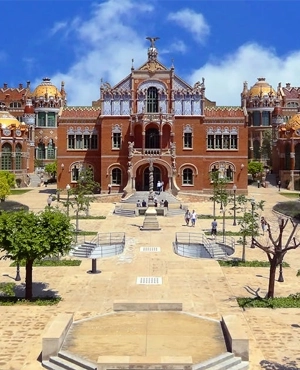
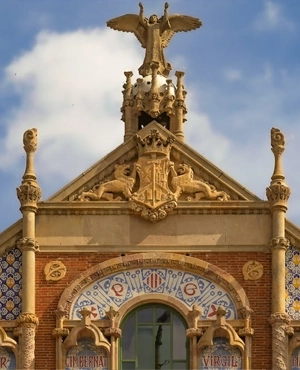
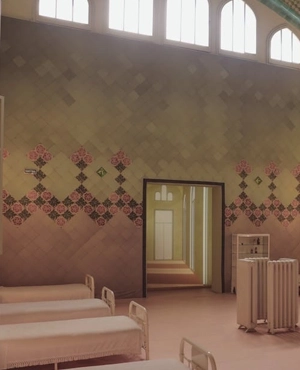
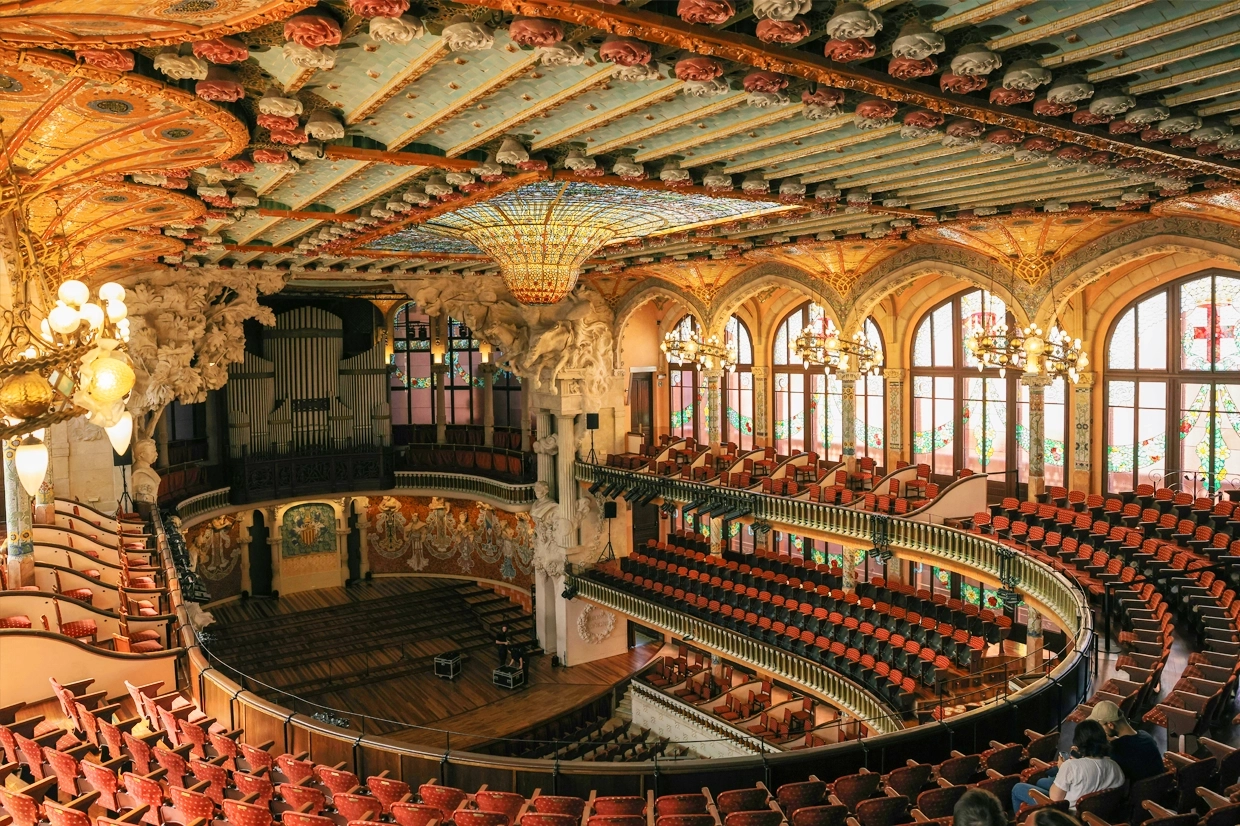
Lluís Domènech i Montaner, working in parallel, created projects distinguished by their elegance and luminosity. His masterworks are the Palau de la Música Catalana, where sculpture, stained glass, and mosaic merge in a unified celebration, and the Hospital de Sant Pau, an innovative complex that blends functionality with incredible aesthetics.

Josep Puig i Cadafalch

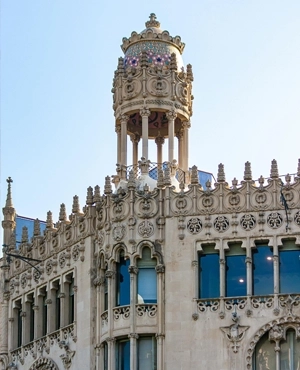
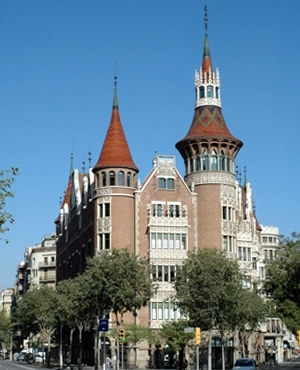
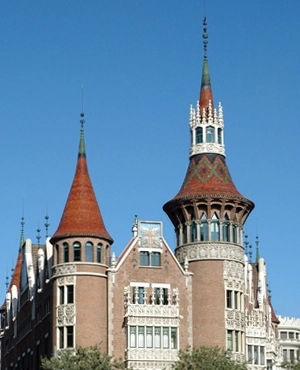
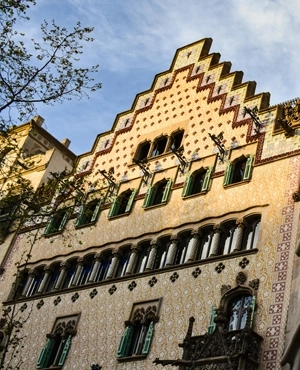
Josep Puig i Cadafalch was the third pillar of Modernisme. His signature was a bold eclecticism with Gothic and medieval motifs. Casa Amatller, standing beside Gaudí’s work on the “Block of Discord,” and Casa de les Punxes with its intricate sculptural groups and stepped gables are brilliant examples.

Together, this triumvirate created Barcelona's unique architectural landscape, where Gaudí's mad fantasy, Domènech's elegant lightness, and Puig's historical rigor engage in an eternal and captivating dialogue.

Choosing Cosmopolita Group Apartments means choosing more than just a place to stay — you are acquiring a key to the world of Catalan Modernisme. We offer unique apartments in the very center of the city’s architectural treasure trove.

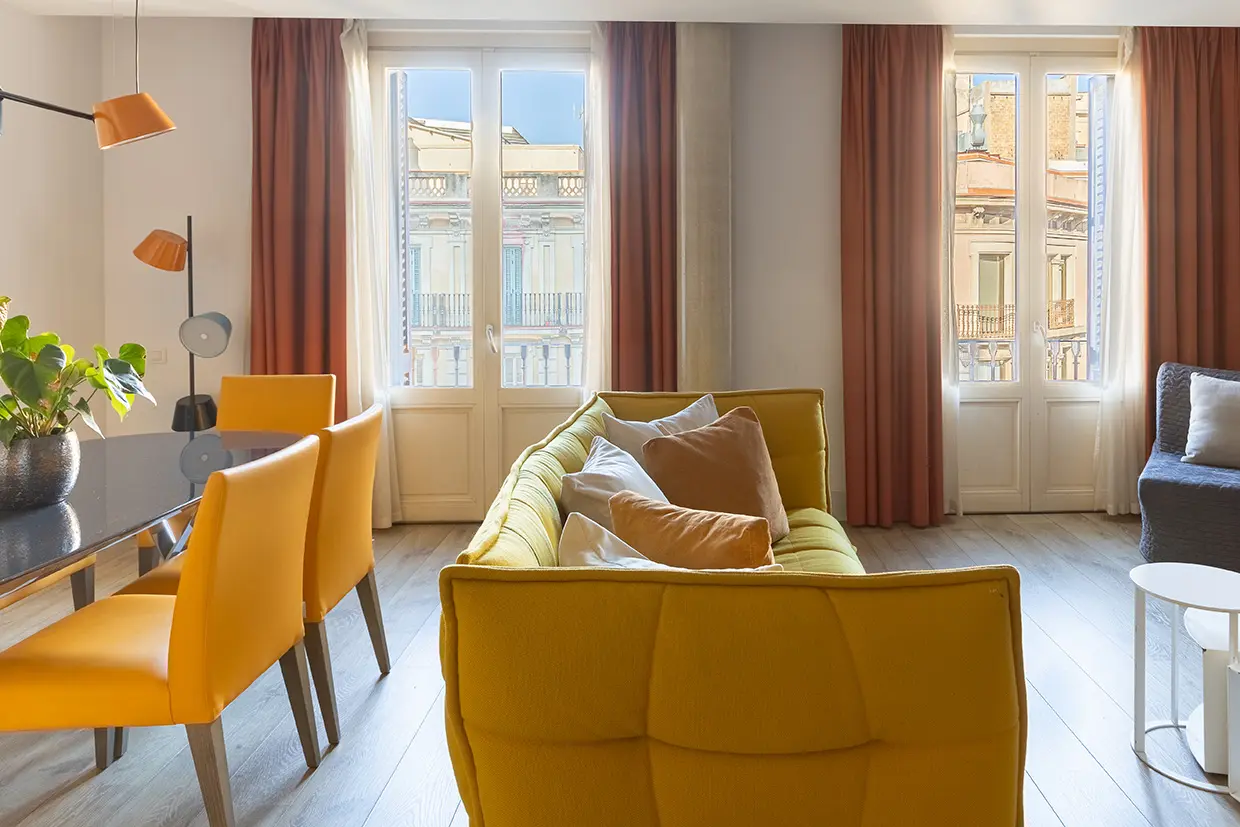
Cosmo Apartments Passeig de Gràcia_4
Cosmo Apartments Passeig de Gràcia

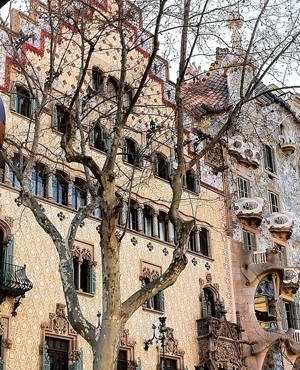
Your day will begin with a stroll along the famous “Block of Discord” on Passeig de Gràcia, where you can admire the playful façade of Gaudí’s Casa Batlló and the elegant Casa Amatller by Puig i Cadafalch up close. Just a short ride away, you will find the mesmerizing Sagrada Família and the whimsical Park Güell.

Cosmo Apartments Marina_1
Cosmo Apartments Marina-Auditori

With Cosmopolita Group, you are not merely a tourist, but a temporary resident of Barcelona, waking up each day surrounded by the greatest legacy of Antoni Gaudí and his contemporaries.

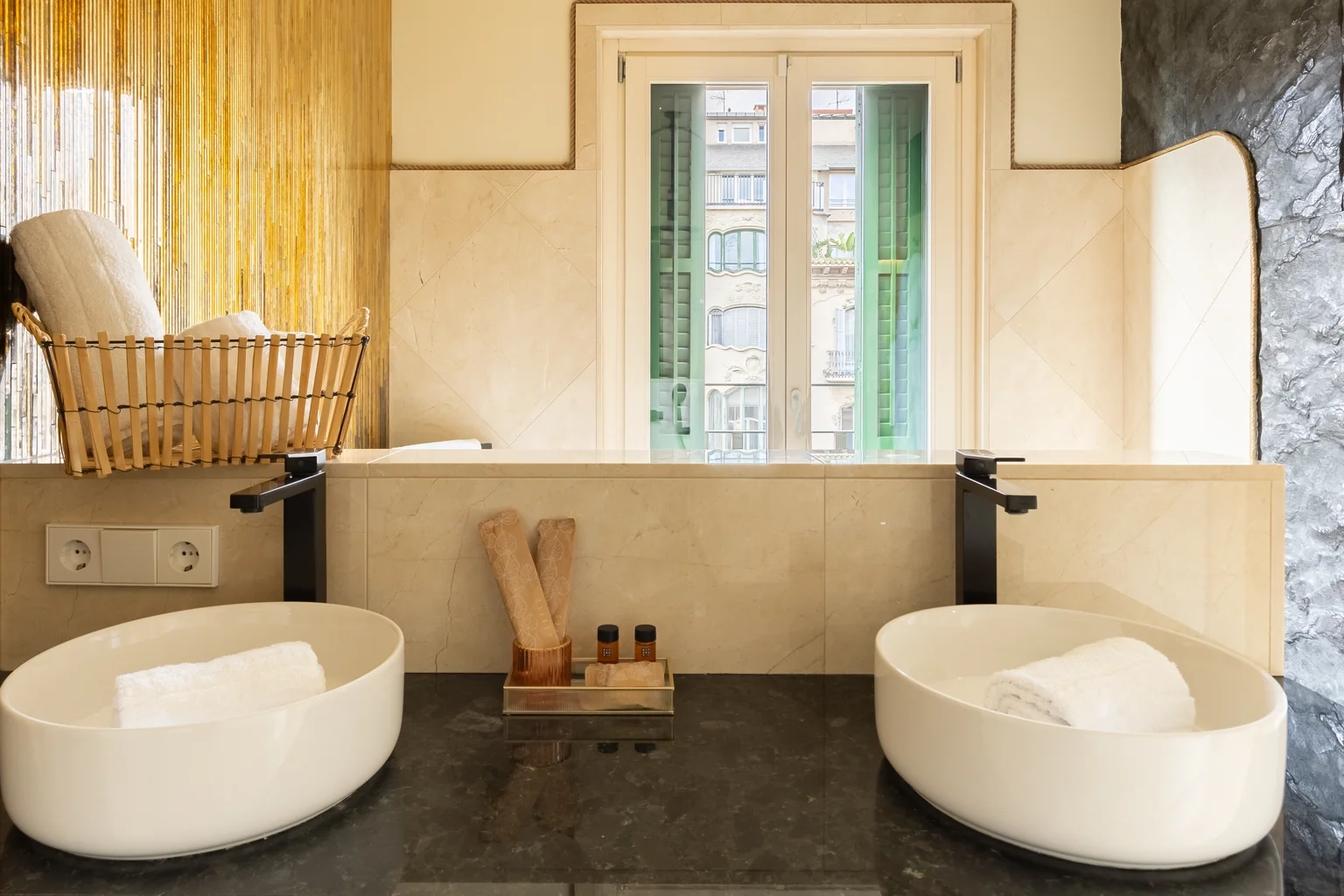
The bathroom has a view of the Rambla Catalunya
Cosmo Apartments Rambla Catalunya

The Soul of Catalonia: Language, Traditions, and Festivals

Barcelona’s cultural heritage isn’t just architecture; it’s the living soul of the Catalan people.

Language:

The Catalan language is the cornerstone of local identity. Street signs, restaurant menus—everything is in two languages, demonstrating the proud character of Catalonia.

Dances:

The Sardana is a dance symbolizing unity and equality. To see the citizens join hands and dance it in the square before the Barcelona Cathedral is to touch a genuine Catalan tradition.

Festivals:

La Mercè (the city’s patron saint festival) and Sant Jordi’s Day (Catalonia’s Valentine’s Day, where books and roses are exchanged) are vibrant, noisy, and colorful events that fill the city with life.

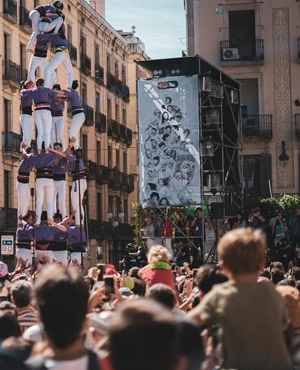
Castells:

The breathtaking spectacle of building human towers (“castells”) by teams of “castellers.” It is a metaphor for Catalan collectivism, mutual support, and strength of spirit.

Barcelona's Museum Heritage: From Past Geniuses to Present-Day Innovators

Barcelona’s museum heritage is not merely a collection of artifacts but a living chronicle of the city. It offers a unique journey through eras, styles, and cultures.

National Art Museum of Catalonia

Art Immersion:

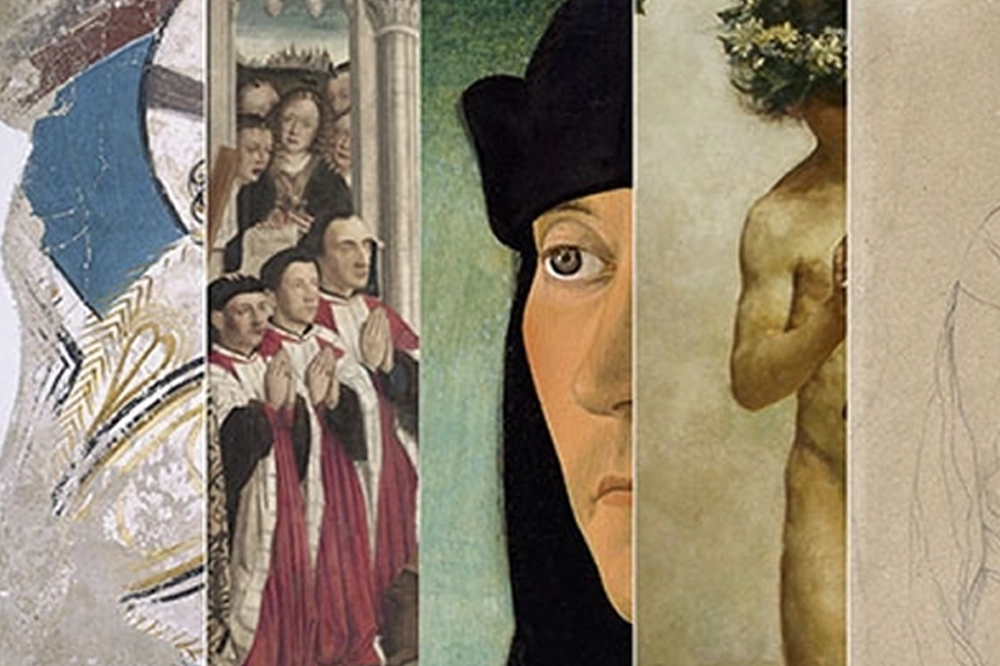
The heart of museum life beats on Montjuïc hill. The National Art Museum of Catalonia (MNAC) stuns with one of the world's most complete collections of Romanesque and Gothic frescoes. Neighboring, the Fundació Joan Miró houses the light and poetic works of the famous Catalan abstract artist. In the Raval district, the Barcelona Museum of Contemporary Art (MACBA) showcases daring works by modern artists.
________

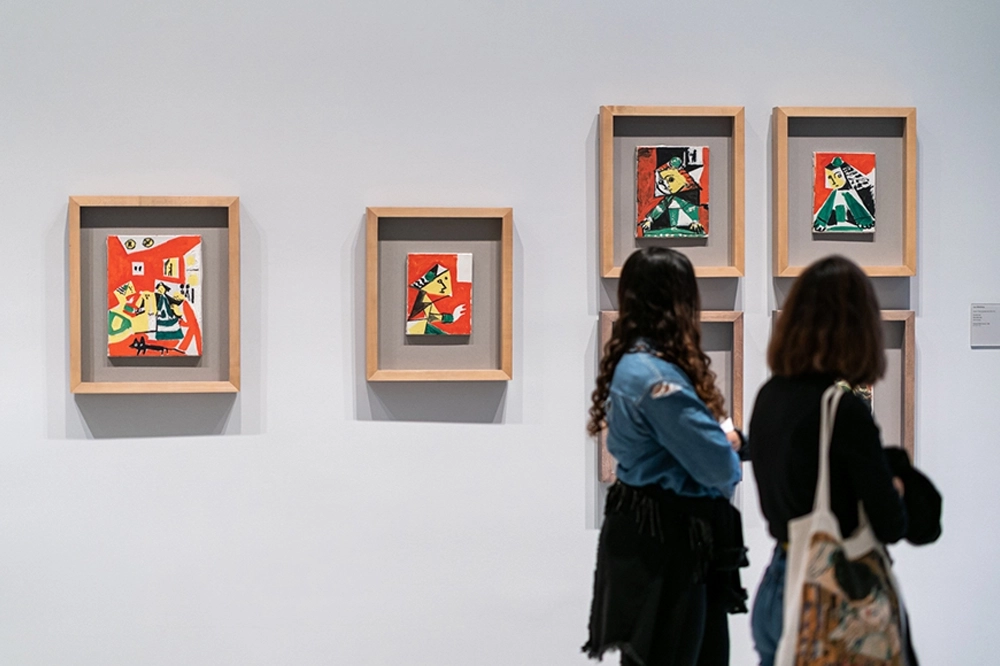
picasso museum

In the World of Geniuses:

For lovers of individual genius, Barcelona is a true paradise. The Picasso Museum, housed in a complex of medieval palaces in the Gothic Quarter, traces the artist's path from academic studies to Cubist experiments. Architecture fans can visit the Gaudí House Museums to understand the origins of his phantasmagorical vision.
________

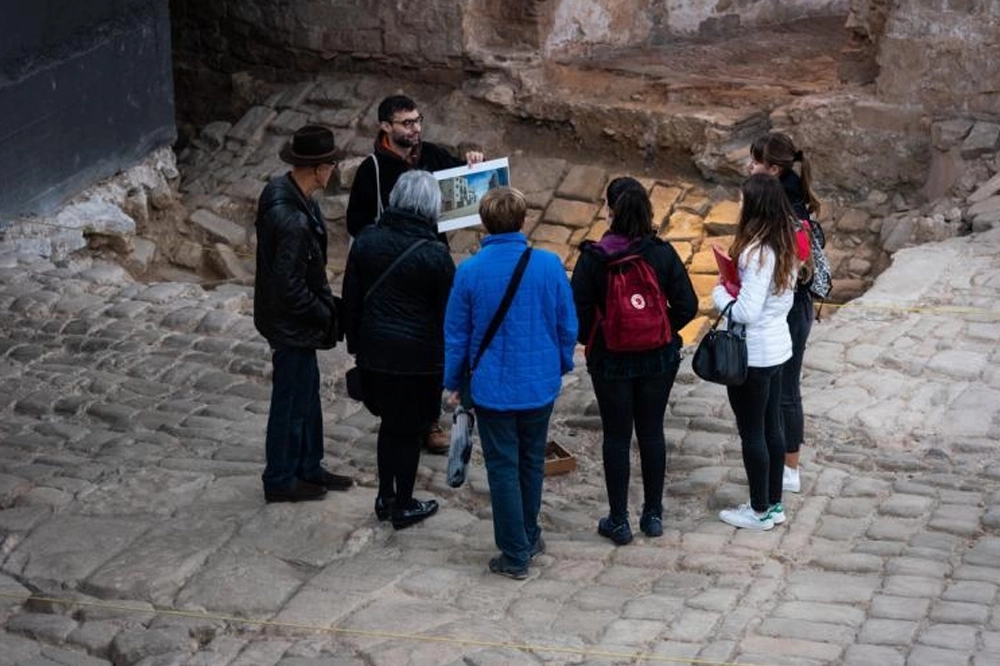
museum of history of Barcelona

History and the Sea:

History buffs can enter the Museum of the History of Barcelona (MUHBA), whose underground halls preserve the ruins of the Roman city Barcino. In the port, the grandiose Maritime Museum recounts Catalonia's glorious past as a great maritime power.
________

Street Art in Barcelona: From Protest to Public Gallery

El Raval_5

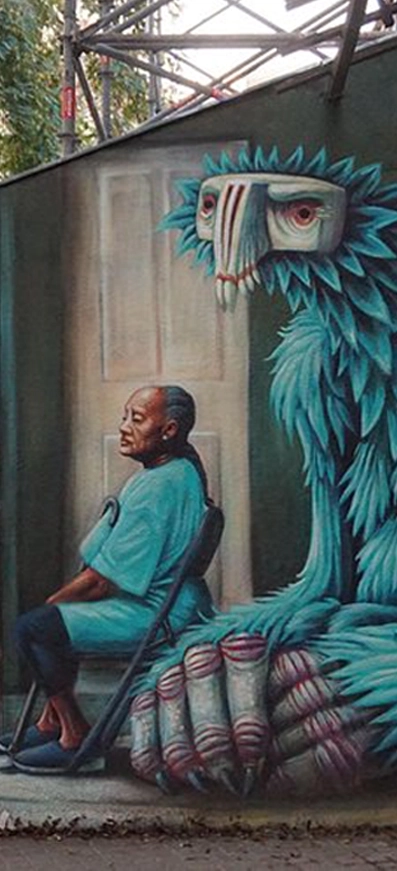
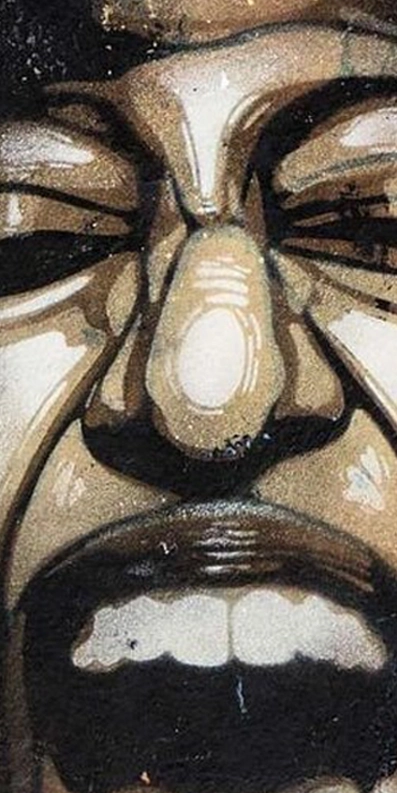
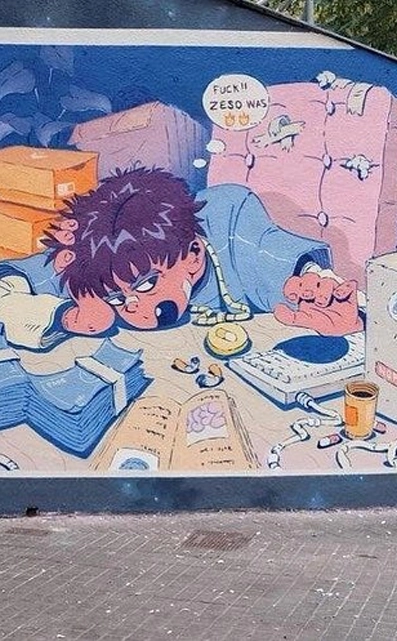
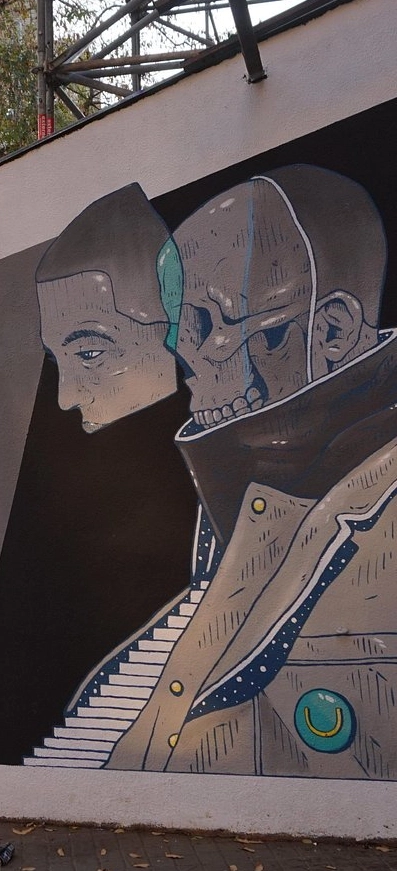
Barcelona’s street art is a dynamic and integral part of its cultural landscape. Often unsanctioned, it transforms the grey façades of industrial zones and old quarters into powerful public statements, reflecting social issues, political sentiments, and the city’s unbridled creative energy.

The epicenters of this movement are the El Raval district and the former industrial area of Poblenou. Here, on the vast walls of abandoned factories and in tightly-packed courtyards, the most large-scale and daring works are born. Barcelona has become a mecca for street artists worldwide.

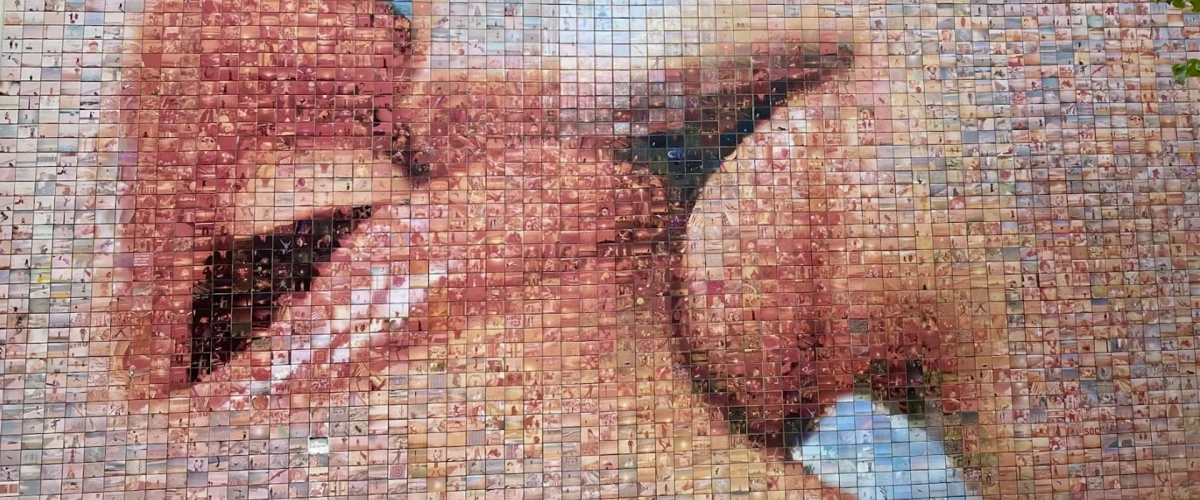
One of the most famous figures is El Xupet Negre, whose recognizable pacifier symbol has been appearing all over the city for over 20 years. Equally famous is the French artist Invader, who places his retro video game-style mosaics on Barcelona’s walls, creating his own “invasion” map of the city.

El Raval
El Raval_2
El Raval_3
El Raval_4

Conclusion: Barcelona – Where Heritage Becomes a Way of Life

Barcelona’s cultural heritage is not a static collection of artifacts behind glass but a living, breathing organism. It’s your morning coffee in a century-old bar, the daily awe at a whimsical Gaudí balcony, and the thrill of hearing a guitar in a tiny Gothic Quarter courtyard. From the Roman walls to the monumental frescoes of MNAC, from the Gothic vaults of Santa Maria del Mar to the futuristic lines of the Sagrada Família and the bold graffiti of El Raval, the city teaches us that true heritage becomes priceless when it is seamlessly woven into daily life, creating that unique, incomparable atmosphere you’ll yearn to return to again and again.

Прокрутить вверх